


Dynamics 365 CRM Integration: Connecting ERP, Power BI, Microsoft 365 & Business Systems
In modern enterprises, there are a number of digital solutions to handle such areas as customer management, accounting, sales, analytics,…
Read More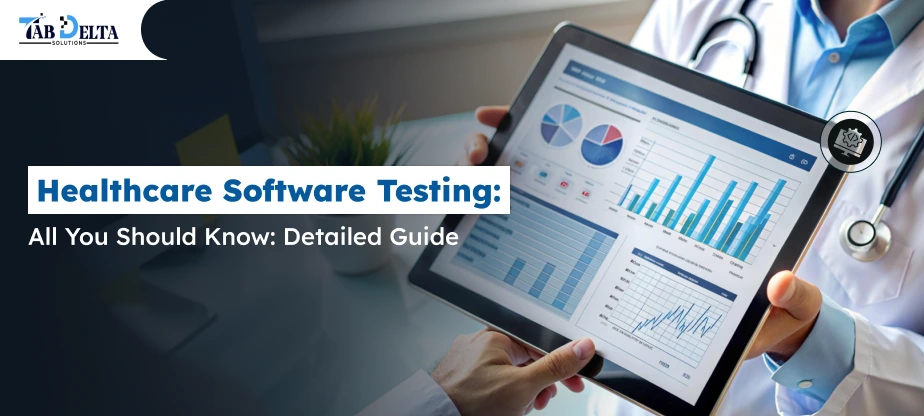
 27, April 2026
The Healthcare industry has made a massive transformation for hospitals, clinics and patients making their interactions easy. Starting from electronic health records to telemedicine apps, here the software plays an important role in the upcoming healthcare system. In case, if there is a small error in the healthcare app then it may lead to serious situations right from patient risk to legal issues. Hence, to avoid this healthcare software testing is very important during healthcare software development.
Let us have an in-depth guide about healthcare software testing. Along with this let us know its importance, types, challenges and tools used for testing.
In simple terms, healthcare software testing can be defined as the process of testing and validating the healthcare applications. By doing this, it ensures to deliver the healthcare app that is secured & safe to use. Along with this, it also ensures that the application meets the regulatory standards protecting data of patients for different devices & OS.
There are different things included in healthcare software i.e.
In medical software, it’s not just only about the functionality but most importantly is security, performance & compliance.

When it comes to the healthcare system, it consists of sensitive data of patients as well as medical information. Even a minor bug into the software may lead to insecurity of data and regulatory penalties. Hence, for this reason Healthcare QA testing services are important for using with-sale healthcare technology.
Following are some of the other reasons –
In case if the software has some fault, then it may give incorrect prescriptions, lost records and may also delay with the treatments. Hence, having a proper medical software testing can help operate without errors.
Generally with healthcare it involves confidential data like medical history, personal or billing details etc. Hence, security testing in healthcare helps protect the data from cyberattacks.
There are strict regulations been compile with healthcare app that includes –
Hence to manage patient data securely, HIPAA compliance testing is also important.
Also Read : Top Automation Testing Companies in the USA
In case of heavy usage, the healthcare application must perform reliably. Hence, this testing ensures smooth performance especially during peak hours.
Mostly, healthcare professionals rely on the software to make the decision. Hence having a smooth user interface can lead to smooth workflows.
The following table shows different types of testing to be performed to test the healthcare software with its functionality.
| Type of Testing | Functionality |
|---|---|
| Functional Testing |
|
| Integration Testing |
|
| Usability Testing |
|
| Performance Testing |
|
| Security Testing |
|
| Compliance Testing |
|
| Interoperability Testing |
|
| Automation Testing |
|
| Mobile App Testing |
|
Ensure compliance, security, and performance with end-to-end healthcare software testing services.
Contact Our QA Team
As compared to different industries, healthcare software has its own unique requirements. This includes –
In this type of testing it stores the medical history of the patient. However the EHR testing services delivers with –
The telemedicine platform helps to connect doctors and patients remotely. In this types of testing it includes –
Also Read : Hire the Best Mobile App Testing Company in the USA: Complete Guide
Many of the medical software often gets connected with physical devices.
Let’s understand with an example like – :
By Performing testing, it ensures that the device is accurate & reliable.
For healthcare mobile apps it requires testing for –
Healthcare app testing in USA helps to ensure regulatory compliance and safety.
Don’t risk patient data, compliance failures, or costly bugs. Get expert medical software testing tailored to your application needs.
Request a Free QA Consultation
Regulatory compliance is one of the most important factors in terms of healthcare software development. There are different testing involved that includes –
With HIPAA compliance testing it ensures with:
HL7 standards generally involve data exchange into the healthcare system.
This type of testing ensures:
Also Read : Manual Testing vs Automation Testing: What’s Right for Your Product?
It is important that the medical device must meet FDA requirements.
This includes:
Many of the healthcare systems serve international users as well. Hence it is important to protect the data under GDPR regulations.
Also Read : Legacy Application Modernization with .NET: Complete Enterprise Guide
We help healthcare startups and enterprises deliver safe, scalable, and compliant software solutions.
Schedule a Free QA Consultation
With the growing technological trends, healthcare industries will evolve continuously revolutionizing patient care, hospital operation or any other medical services. Hence, healthcare software is one of the most important parts when it comes to healthcare software development.
In medical software testing, it involves EHR testing services for security testing in healthcare and HIPAA compliance software testing that ensures protection of data and safe healthcare operations. As the system becomes more complex, the Healthcare QA testing services will grow accordingly. Healthcare organizations need to invest for the best practices so as to get delivered with high-performing healthcare applications.
In simple terms, healthcare software testing can be defined as the process of checking healthcare applications to make sure they work correctly, safely, and securely. It includes testing systems like patient portals, hospital management systems, and telemedicine apps.
It is important for HIPAA compliance because healthcare software handles sensitive patient information such as medical records and personal data. HIPAA rules require that patient data be protected from unauthorized access and misuse.
The healthcare software testing services ensure data security in the USA performs with several security checks on healthcare applications. These include vulnerability testing to find weak points, penetration testing to simulate cyberattacks, and encryption testing to protect patient data. Testers also check role-based access controls to make sure only authorized staff can access patient records.
The key challenges in medical software testing for healthcare apps includes handling sensitive patient data while maintaining privacy during testing. Another challenge is ensuring compliance with strict regulations such as HIPAA and FDA guidelines.
Healthcare systems also integrate with many devices and platforms, making interoperability testing complex. Legacy systems used in hospitals can create compatibility issues with modern apps. Large volumes of medical data require thorough testing for performance and accuracy.
There are different types of testing used in healthcare application testing services. This includes functional testing, software compatibility, performance testing, security testing, usability testing, integration testing, compliance testing and automation testing.
The HIPAA compliance testing in healthcare software development is a process that checks whether healthcare software follows HIPAA rules for protecting patient information. This type of testing ensures that personal health data is stored securely, transmitted safely, and accessed only by authorized users. It includes testing encryption methods, secure login systems, audit logs, and data backup procedures.
The cost of medical software testing in the USA depends on the complexity of the project and testing requirements. Factors that affect cost include project size, number of features, regulatory requirements, testing duration, and use of automation tools. Hiring experienced QA testing teams may cost more but helps ensure better quality and compliance.
There are different tools used for healthcare automation testing solutions. Selenium is used for automating web-based healthcare applications. Appium is used for testing mobile healthcare apps on Android and iOS devices. JMeter helps test system performance under heavy user loads.
Test Complete is used for automated functional testing across platforms. Postman is commonly used for API testing, especially when healthcare systems exchange data. Security tools like OWASP ZAP help detect vulnerabilities.
In order to choose the right healthcare software testing company in USA, start by checking the company’s experience in healthcare projects and knowledge of HIPAA and other regulations. Look for teams that offer multiple testing services such as security testing, performance testing, and automation testing.
Review their portfolio, client feedback, and certifications. Make sure they use modern testing tools and follow industry standards. Communication and support are also important factors when working with external teams.
Explore our latest research on cutting-edge tech trends and discoveries to stay ahead in this digital-first landscape!